CCTV Drain Inspection Gold Coast
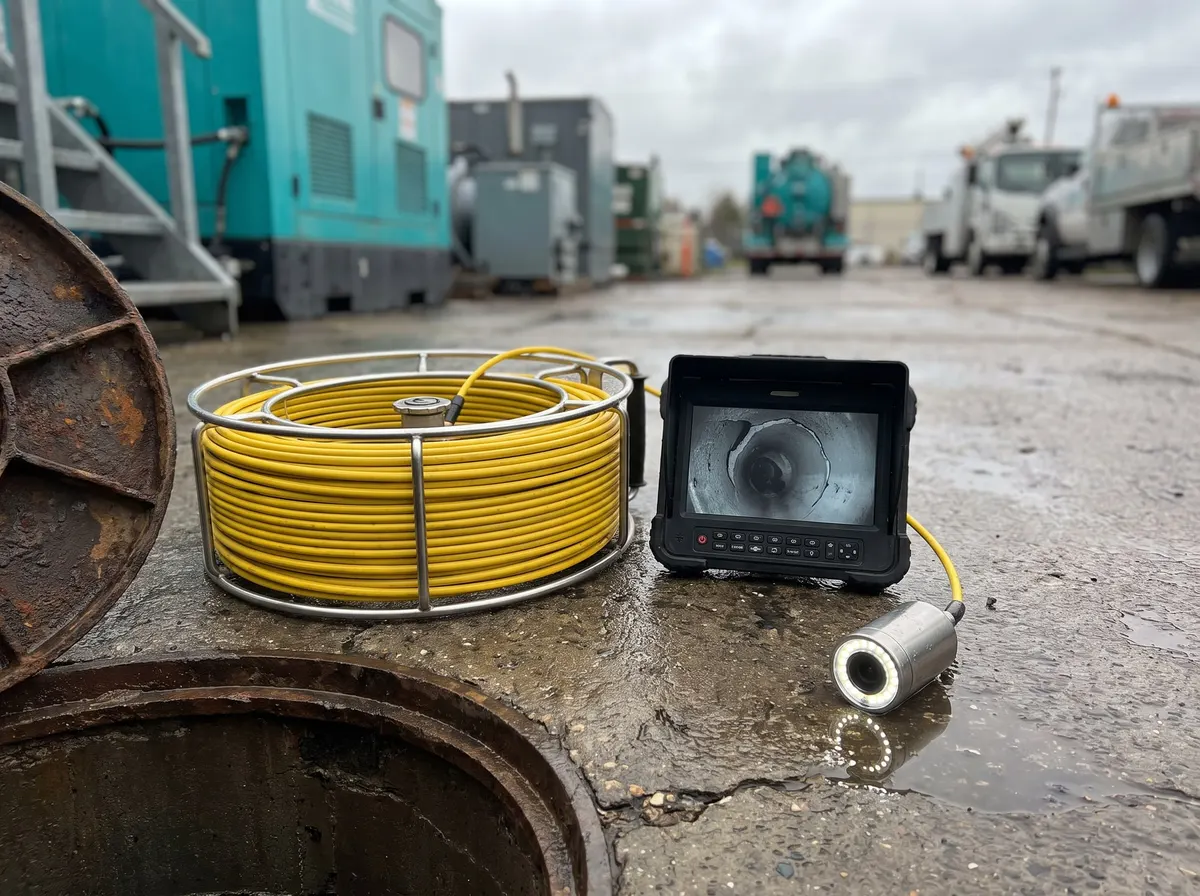
If a Gold Coast drain has blocked more than once in the same spot, a camera answers the question clearing cannot: what condition the pipe is in and why it keeps happening. Arranged through independent licensed drainage contractors.
Worth a call if you are paying to clear the same drain repeatedly.
- Open 24 hours, seven days a week
- Repeat blockages, suspected pipe damage, and pre-repair decisions
- Blocked drains only — no forms, no callback queue
Why a camera changes the conversation
Without an inspection, a drain problem is worked out by inference — which fixtures are affected, how the water behaves, what came back out during clearing. That inference is often good enough for a one-off blockage. It stops being good enough the moment the same drain blocks twice.
A repeat blockage in the same location is not bad luck. Something in that section is catching material: roots through a joint, a lip where a pipe has shifted, a low point holding water, a section of pipe that has deteriorated. Each of those has a different answer, and you cannot pick between them from the surface. The camera turns a guess into an observation.
It also protects you in the other direction. If the pipe turns out to be sound and the blockage really was a one-off, that is worth knowing before anyone proposes excavation or relining.
What a camera can and cannot establish
| Question | Can a camera answer it? | Detail |
|---|---|---|
| Where the blockage is along the line | Yes | This is the most common reason to put a camera in a drain. |
| Root intrusion, and where roots are entering | Yes | Roots are visible, and so is the joint or crack they came through. |
| Cracks, open joints and displaced sections | Yes | Visible defects in the pipe wall are what a camera is best at. |
| A sag or belly holding standing water | Usually | Water sitting in a section that should drain is normally apparent on the footage. |
| Pipe material and rough changes of condition | Usually | Changes between materials and obvious deterioration can be seen. |
| Exactly how much longer the pipe will last | No | A camera shows current condition. It does not predict a date of failure. |
| What is behind the pipe wall or in the surrounding ground | No | The camera only sees inside the pipe. |
| Whether a blockage will return | Inference only | It shows the conditions that make recurrence likely. That is a judgement, not a reading. |
What happens when you call about an inspection
An inspection is usually booked because something has already gone wrong more than once. Start with that history.
-
You describe what the drain is doing
How many times the drain has blocked, how far apart, which fixtures are involved, and whether you are asking because of a repeat, a purchase, or a repair decision.
-
The job goes to a drainage contractor
Your call is matched to an independent licensed drainage contractor working across the 6 Gold Coast suburbs covered here. Phone is the only way in — there is no form, no callback queue and no chat widget.
-
They arrange attendance, quote and invoice you directly
Scope, timing and cost are agreed between you and the contractor who does the work. Their licence, their insurance and their workmanship are theirs.
Want the pipe looked at properly?
The line is open open 24 hours, 7 days. Have the short version of the problem ready and the call is quicker for both of you.
Call 0483 909 757How an inspection typically runs
A general sequence. The detail changes with access, and with what the camera finds partway along.
-
Get the line flowing enough to see
A camera in a drain that is full of water and waste shows water and waste. Where a line is completely blocked, some clearing usually has to happen before an inspection is worth doing.
-
Enter through an access point
The camera goes in through an inspection opening, a chamber or a removed fixture. Where the camera enters sets which part of the line can be seen and in which direction.
-
Travel the line and record what is there
The operator works the camera along the drain looking for the things that explain a repeat problem: root intrusion, cracked or open joints, displacement, a sag holding water, a change of material, an obstruction.
-
Locate the point of interest
Finding a defect is only half of it. Knowing where it is — how far along the line, how deep, and where that lands above ground — is what makes any repair decision possible.
-
Turn the footage into a decision
The useful output is not the video. It is a clear answer to: is this pipe sound, is the problem a one-off, and if not, what would fix it rather than defer it.
Has the same drain blocked more than once?
That is the situation an inspection is for. Mention how many times, how far apart, and whether it is always the same fixtures.
Call 0483 909 757What usually follows an inspection
An inspection is a decision point, not an end in itself. Three outcomes cover most of what it leads to.
-
The pipe is sound
The blockage was what it looked like — a one-off. Ordinary drain clearing options are the whole answer, and there is nothing further to decide.
-
Build-up or roots, in an intact pipe
Thorough cleaning of the line becomes worthwhile rather than optional, and it is reasonable to plan for it recurring on a known interval instead of as a surprise.
-
A structural defect
A crack, an open joint, displacement or a sag. Clearing keeps buying time; the pipe needs repair to actually change the outcome. Repair work is outside the scope of the services published on this site — see the note below.
Scope note. Drain repair and pipe relining are not covered on this site. If an inspection points to a repair, that is a conversation to have with the contractor directly rather than an assumption to make from this page.
Questions about CCTV drain inspections
When is a CCTV drain inspection actually worth it?
The clearest case is a drain that has blocked more than once in the same place. A second or third blockage in the same section is evidence that something about the pipe is causing it, and clearing it again treats the symptom. Other good reasons: before authorising a repair, when buying a property with mature trees or older drainage, or when a blockage cleared unusually hard.
What is the difference between locating a blockage and repairing the pipe?
Locating establishes what is wrong and where. Repairing changes the pipe. They are separate pieces of work with separate decisions attached, and it is reasonable to want the first before committing to the second. Be cautious of any sequence where a repair is proposed and priced before anyone has actually looked inside the drain.
Should the drain be cleared before or after the camera goes in?
Usually the line has to be flowing before an inspection produces anything useful — a camera cannot see through a full pipe. The common sequence is to clear enough to restore flow, then inspect to find out why it blocked. Where the pipe is suspected to be fragile, that order sometimes changes.
Should I expect to see the footage myself?
It is a fair thing to ask for, and asking for it before work starts is easier than asking afterwards. What you are really after is the reasoning: where the problem is, what it is, and why the proposed next step follows from it. Whether footage is provided is a question for whoever you engage.
Talk through whether an inspection is worth it
If the drain has only blocked once and cleared easily, it may not be. That is a reasonable thing to say out loud.
Call 0483 909 757