New drainage, different causes
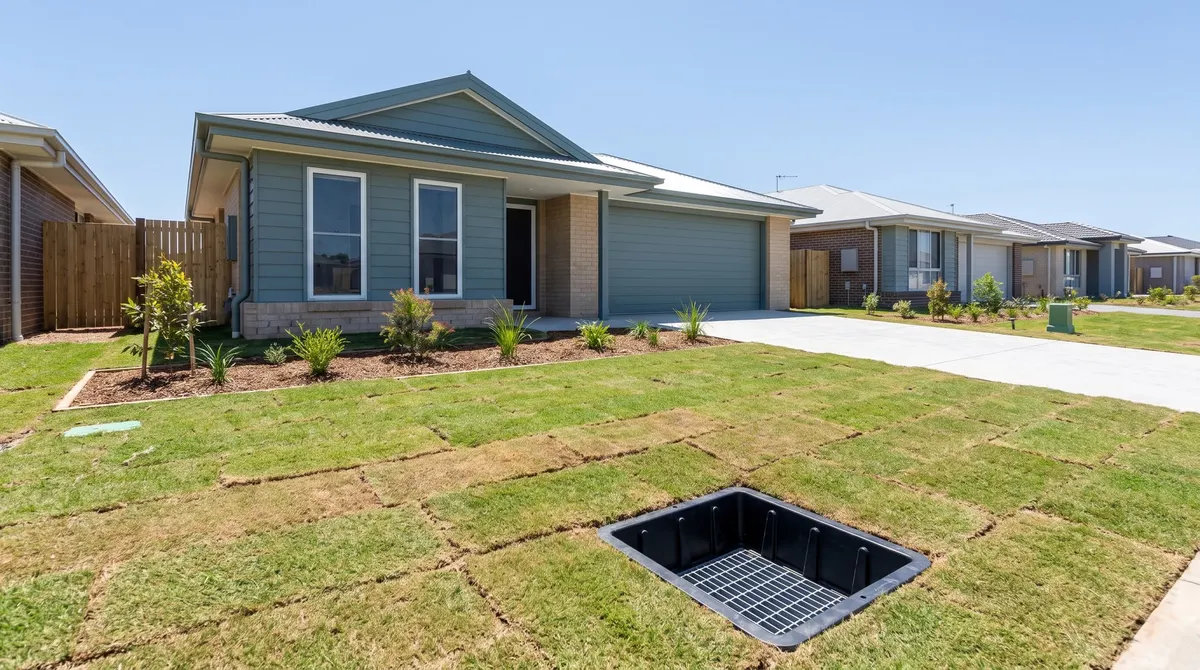
A recently installed drain is unlikely to have the age-related problems that dominate older systems. Deteriorated pipe material, decades of accumulated build-up and long-established root intrusion all take time that a new line has not had. That genuinely narrows the field.
What replaces them is a different set of possibilities. Construction leaves things behind: mortar and grout washings, sand, offcuts, render, and the general debris of a site that was not yet a home. Some of it ends up in drainage lines that were open during the build. It may sit harmlessly for months and then combine with ordinary household waste into something that will not pass.
Ground movement is the other one worth knowing about. Newly placed fill and recently disturbed ground settle. If a section of drain settles unevenly, it can develop a low point that holds water and solids instead of carrying them away. That is not a defect you would notice from the surface, and it produces exactly the repeat-blockage pattern people expect from old pipes.
Landscaping is the third. Trees and shrubs planted at handover are small. The drainage line they were planted near does not move, and the plants do. A choice made in year one becomes a drainage consideration in year eight.
None of this means a new drain is likely to fail. It means that when a new drain does block, "it is too new to be a pipe problem" is not a safe conclusion, and it is worth establishing the cause rather than assuming.