Blocked drains in leased and commercial premises
In an owner-occupied house, the person with the problem is the person who fixes it. In tenanted or commercial premises, those can be three different parties: the occupier who discovered it, the owner who holds the asset, and the managing agent who sits between them. What the lease says about maintenance and repairs usually determines who arranges the work and who carries the cost.
The practical consequence is that acting fast and acting correctly can pull in opposite directions. Commissioning a plumber directly gets the drain running today; it may also mean paying for something the lease made someone else’s responsibility. Reporting it and waiting preserves the position but leaves the drain blocked.
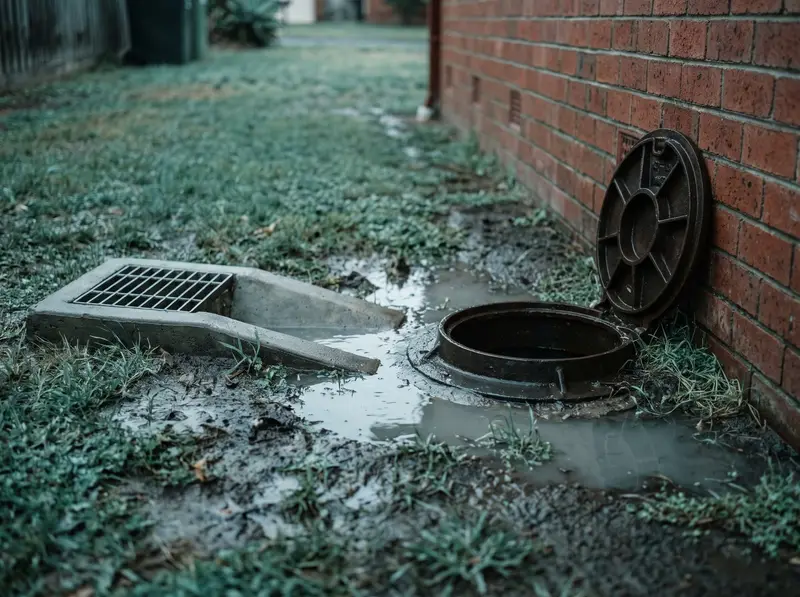
A workable rule for most situations: if there is an immediate health or safety issue — waste water surfacing where people walk, a food premises unable to operate hygienically — deal with the immediate risk and notify in parallel. If it is a slow drain that is a nuisance rather than a hazard, notify first and let the process work.
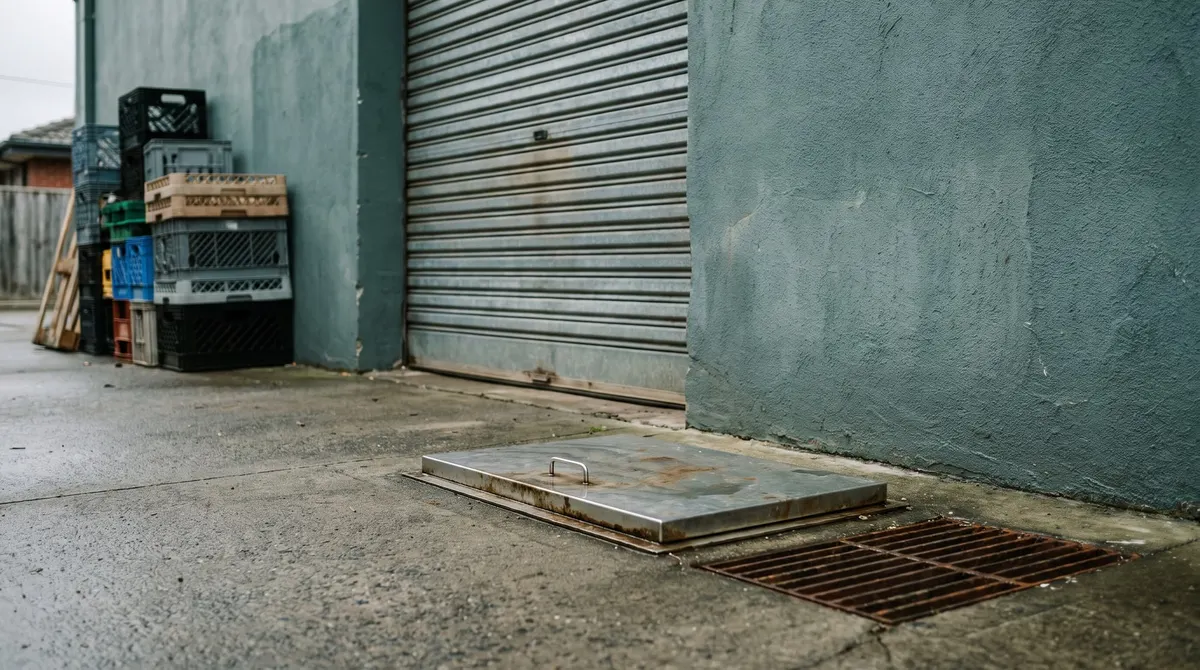
Food premises carry an additional dimension. Kitchens produce fats, oils and grease at a volume no domestic sink approaches, which is why commercial kitchens have arrangements for handling them that houses do not. A recurring blockage on a food premises line frequently traces back to how those are working, and that is a maintenance question rather than an emergency one.
None of this changes what is physically wrong with the pipe. It changes who makes the decision about it, and that is worth establishing before the call rather than during it.